Photo Gallery
History

Sultan Ahmet Mosque at dusk
Expanding the ancient Greek colony of Byzantium by the order of the Roman Emperor Constantine the Great, the imperial city of Constantinople
was for nearly a thousand years the last remaining outpost of the Roman
(later termed Eastern Roman or Byzantine) Empire. It was finally
conquered by the Ottoman Sultan Mehmed II on 29 May 1453, an event
sometimes used to mark the end of the Middle Ages. It was the nerve
center for military campaigns that were to enlarge the Ottoman Empire
dramatically. By the mid 1500s, Istanbul, with a population of almost
half a million, was a major cultural, political, and commercial centre.
Ottoman rule continued until it was defeated in WWI and Istanbul was
occupied by the allies. When the Republic of Turkey was born in 1923
after the War of Independence, Kemal Atatürk moved its capital to the
city of Ankara. However, Istanbul has continued to expand dramatically;
today its population is approximately 14 million and increases at an
estimated 400,000 immigrants per year. Industry has expanded even as
tourism has grown.
Climate

Istanbul has a temperate oceanic climate which is influenced by a
continental climate, with hot and humid summers and cold, wet and
occasionally snowy winters.
Istanbul has a high annual average rainfall of 844 mm (which is
more than that of London, Dublin or Brussels, whose negative reputation
Istanbul does not suffer), with late autumn and winter being the
wettest, and late spring and summer being the driest. Although late
spring and summer are relatively dry when compared to the other seasons,
rainfall is significant during these seasons, and there is no dry
season as a result.
If there is a negative reputation that Istanbul does suffer from,
it is the high annual relative humidity, especially during winter and
summer with the accompanying wind chill and concrete-island effect
during each respective season.
Summer is generally hot with averages around 27ºC during the day
and 18ºC at night. High relative humidity levels and the
‘concrete-island effect’ only make things worse. Expect temperatures of
up to 35° C for the hottest days of the year. Summer is also the driest
season, but it does infrequently rain. Showers tend to last for 15-30
minutes with the sun usually reappearing again on the same day. Flash
floods are a common occurrence after heavy rainfalls (especially during
summer), due to the city's hilly topography and inadequate sewage
systems.
Winter is cold and wet, averaging 2ºC at night and 7ºC during the
day. Although rarely below freezing during the day, high relative
humidity levels and the wind chill makes it feel bitterly cold and very
unpleasant.
Snowfall, which occurs almost annually, is common between the
months of December and March, with an annual total snow cover of almost
three weeks, but average winter snowfall varies considerably from year
to year, and snow cover usually remains only for a few days after each
snowfall, even under intense snow conditions.
Late spring (late May to early June) and early autumn (late
September to early October) are very pleasant and therefore the best
times to visit the city. During these periods it is neither cold nor
hot, and still sunny, though the nights can be chilly and rain is
common.
For visitors an umbrella is recommended during spring, autumn and
winter, and during the summer to avoid the sun and occasionally the
rain. However, it’s not such a big problem, since streets of Istanbul
are suddenly filled by umbrella sellers as soon as it starts raining.
Although the umbrellas they provide are a little shoddy, going rate is
only TL 5 –about US$ 3- per umbrella (though you can find much better
umbrellas for that price at shops if you look around a bit).
Light clothing is recommended during summer and a light jacket
and/or light sweater if the summer evenings do become chilly, warm
clothing is essential during winter and a mixture of the two during
spring and autumn.
Also take note that due to its huge size, topography and maritime
influences, Istanbul exhibits a multitude of distinct micro climates.
Thus, different sections of Istanbul can experience different weather
conditions at the same time. For example, at the same moment, it can be
heavily raining in Sarıyer in the north, mildly raining in Levant
(northern terminus of metro line), while Taksim, the southern terminus
of metro line, is having a perfectly sunny day.
Istanbul kart
Buying an Istanbul kart is a good idea if you are in Istanbul for more
than a day or two, and intend to use public transport. This is a
plastic card that looks like a credit card. It can be used as a ticket
on buses, trams, suburban trains, metro and even the cross-Phosphorus
ferries. You touch the Istanbul kart to a reader when you get on the bus
or enter the tram/metro platform. The great part for groups of travelers is that you can buy only one and touch it as many times as
there are passengers (unlike London's Oyster card, there is no need to touch out).
You can buy or refill them at designated booths located at any major
bus, tram, to metro station, as well as some other places such as
newspaper stands close to bus stops. An Istanbul kart provides a flat
fare of 1.95TL for the first ride, which is a cheaper option in
comparison to tokens used in Metro and speed trams (jeton, 3TL), but
more expensive for buses. It is also 3,50TL to the Prince's Islands,
instead of 5TL for a token. Istanbul kart also allows discounts in
transfers (when used multiple times within a limited period, roughly an
hour and a half since the last time you used it). A deposit for the
device itself is payable when you buy it (10 TL - or 7TL? - confusion
reigns!), which is not refundable, and neither is any credit left on the Istanbul kart (when bought at the Ataturk airport metro terminus, 4TL
deposit will be already on the card when bought). Note that there are
different booths for buying the card and for charging it, and charging
booths accept only 5, 10, and 20 lira banknotes.
Once you have bought and loaded the card, your first journey
costs 1.95TL (except for Metro bus, which costs around 3TL), then any
change within approximately 2 hours costs progressively cheaper; second
journey is 1.25TL, third is 1.00TL and so on. Note that changing metro
line or travel type, i.e. ferry to bus, or metro to tram, requires you
to go out of the turnstiles then to check back in to the new line or
travel type. Therefore this is extremely more economic than buying
individual jetons at 3TL per journey.
The Istanbul kart is relatively new, and is replacing the older Akbil
metal touch-token which is being phased out (but is still in wide use).
It is now just about impossible to buy an Akbil. However, there are
still some places that do not yet accept the Istanbul kart, so if you
have an Akbil token left over from previous trips to Istanbul, keep hold
of it: they still work. Some Kiosks still have Akbil signs rather than Istanbul kart signs - but you can usually buy or top up your Istanbul kart at any kiosk where the Akbil sign is displayed.
Buses and streetcars tend to be very crowded during rush hours,
especially on Mondays and Fridays. That can also create opportunities
for pickpockets.
What Is ISTANBUL KART
- Smart passenger information system
- Contact less smart card
- RFID( radio-frequency identification) card
- Pre-paid and rechargeable card
- TYPES of Istanbul kart
The New İstanbul Kart is a RFID (Radio-frequency identification) card
which fits perfectly in a wallet since it has the dimensions of a
regular credit card. It is a pre-paid and rechargeable card, which can
be used to cover fares and entrance fees. It will enable passengers to
cover any kind of transportation fees, including bus, tram, metro,
funicular, ferry and sea-bus fares.
The Electronic Fare Collection System is an information
management system that is secure, fast and accurate. It provides
pre-paid rides in the mass transportation system.
Smart cards are widely used for their ease of use and high security.
istanbulkart is the contactless smart card introduced by the Istanbul
Metropolitan Municipality for urban services and electronic ticket
applications. It is up to the international standards for contactless
smart cards (ISO 7816 and ISO 14443).
Work is underway to utilize "istanbulkart" as a loyalty card and a
membership card in civic services, event ticketing, car parking, social
aid identification and access control, e-health, electronic passport,
electronic ticket, e-campus, etc.
The first step of the project was to transfer the conventional
electronic fare collection system into the card system in addition to
AKBİL.
Istanbul kartis the transit pass card of Istanbul public transportation
A plastic RFID chip card that you load money onto then use for transit
fares. It's the most convenient way to travel on public transit in
Istanbul
Telephone codes
Istanbul is the only city/province in Turkey which has more than one telephone code: 212 for European side, 216
for Asian side and Princes’ Islands. When calling from one continent to
the other, the usual dialing format used for intercity calls should be
used, as if it’s an intercity call: 0+area code (212 or 216)+7-digit telephone number.
It may appear as an intercity call, but it will be treated as a local
call in respect to payment. When making an intercontinental call, if you
forget to dial the code, your call will not be automatically
routed to the other continent number, it is likely that you will be
connected to the “wrong” number which is in the same continent with you,
because much of the number sets are used on both continents (albeit
with different codes of course). When dialing a number that is on the
continent you are already standing on, only 7-digit number is enough.
Don’t forget to dial the code first no matter which continent you are in
if you are calling a landline number from a cell phone (even if it’s a
number that is in the same continent with you), though.
SIM Cards
Prepaid SIM cards can be bought (for around 30 TL with 5TL usable
balance) at Vodafone, Avea or Turkcell kiosks at the airport or in shops
around town. They might ask to make a copy of your passport.
However, to be able to use your phone you need to get it unlocked
for use in Turkey. This process takes up to 4 days so getting a SIM
isn't really practical for people on a short visit.
Internet
Cafés with free wireless internet (wi-fi):
- Several of the nargile places in Tophane
- Several cafes in Cihangir, including Kahvedan, Meyva, Komşufırın and Kahve Altı
- Many cafés and restaurants along Istiklal Caddesi in Beyoglu
- Both the large American fast food restaurant chains
- There is one upstairs by the restaurants facing the side of Aya Sofia and behind the entrance to the Basilica in Sultanahmet.
- Starbucks has quite a few shops around, and (at least) those at the touristic zones, has a free wireless connection.
In the recent years, the number of cafes and shopping centers with wi
fi Internet access has increased dramatically, most of them still being
free. Most internet cafes have high speed ADSL connections, and they
are very inexpensive compared to Europe (about 0.50-1.50 Euros per
hour).
- Most hostels and hotels of the Sultanahmet area have wi-fi Internet access in thier lobby, and often in the rooms. They can be overpriced, though.
Historic Areas of Istanbul
Brief synthesis
Strategically located on the Bosphorus peninsula between the Balkans
and Anatolia, the Black Sea and the Mediterranean, Istanbul was
successively the capital of the Eastern Roman Empire, and the Ottoman
Empire and has been associated with major events in political history,
religious history and art history for more than 2,000 years. The city is
situated on a peninsula which is surrounded by the Golden Horn (Haliç),
a natural harbor on the north, the Bosphorus on the east and the
Marmara Sea on the south. The Historic Peninsula, on which the former
Byzantium and Constantinople developed, was surrounded by ancient walls,
built initially by Theodosius in the early fifth century.
The Outstanding Universal Value of Istanbul resides in its unique
integration of architectural masterpieces that reflect the meeting of
Europe and Asia over many centuries, and in its incomparable skyline
formed by the creative genius of Byzantine and Ottoman architects.
The distinctive and characteristic skyline of Istanbul was built up
over many centuries and encompasses the Hagia Sophia whose vast dome
reflects the architectural and decorative expertise of the 6th century,
the 15th century Fatih complex and Topkapi Palace - that was
continually extended until the 19th century, the Süleymaniye Mosque
complex and Sehzade Mosque complex, works of the chief architect Sinan,
reflecting the climax of Ottoman architecture in the 16th century, the
17th century Blue Mosque and the slender minarets of the New Mosque near
the port completed in 1664.
The four areas of the property are the Archaeological Park, at the
tip of the Historic peninsula; the Suleymaniye quarter with Suleymaniye
Mosque complex, bazaars and vernacular settlement around it; the Zeyrek
area of settlement around the Zeyrek Mosque (the former church of the
Pantocrator), and the area along both sides of the Theodosian land walls
including remains of the former Blachernae Palace. These areas display
architectural achievements of successive imperial periods also including
the 17th century Blue Mosque, the Sokollu Mehmet Pasha Mosque, the 16th
century Şehzade Mosque complex, the 15th century Topkapi Palace, the
hippodrome of Constantine, the aqueduct of Valens, the Justinian
churches of Hagia Sophia, St. Irene, Küçük Ayasofya Mosque (the former
church of the Sts Sergius and Bacchus), the Pantocrator Monastery
founded under John II Comnene by Empress Irene; the former Church of the
Holy Saviour of Chora with its mosaics and paintings dating from the
14th and 15th centuries; and many other exceptional examples of various
building types including baths, cisterns, and tombs.
Criterion (i): The Historic Areas of Istanbul
include monuments recognised as unique architectural masterpieces of
Byzantine and Ottoman periods such as Hagia Sophia, which was designed
by Anthemios of Tralles and Isidoros of Miletus in 532-537 and the
Suleymaniye Mosque complex designed by architect Sinan in 1550-1557.
Criterion (ii): Throughout history the monuments in
Istanbul have exerted considerable influence on the development of
architecture, monumental arts and the organization of space, both in
Europe and the Near East. Thus, the 6,650 meter terrestrial wall of
Theodosius II with its second line of defence, created in 447, was one
of the leading references for military architecture; Hagia Sophia became
a model for an entire family of churches and later mosques, and the
mosaics of the palaces and churches of Constantinople influenced both
Eastern and Western art.
Criterion (iii): Istanbul bears unique testimony to
the Byzantine and Ottoman civilizations through its large number of high
quality examples of a great range of building types, some with
associated artworks. They include fortifications, churches and palaces
with mosaics and frescos, monumental cisterns, tombs, mosques, religious
schools and bath buildings. The vernacular housing around major
religious monuments in the Süleymaniye and Zeyrek quarters provide
exceptional evidence of the late Ottoman urban pattern.
Criterion (iv): The city is an outstanding set of
monuments, architectural and technical ensembles that illustrate very
distinguished phases of human history. In particular, the Palace of
Topkapi and the Suleymaniye Mosque complex with its caravanserai,
madrasa, medical school, library, bath building, hospice and imperial
tombs, provide supreme examples of ensembles of palaces and religious
complexes of the Ottoman period.
Integrity
The Historic Areas of Istanbul include the key attributes that convey
the Outstanding Universal Value of Istanbul as the parts of the city
that had escaped major changes and deterioration in the 19th and 20th
centuries and were already protected by national legislation at the time
of inscription.
Vernacular timber housing in the Süleymaniye and Zeyrek quarters, was
recognized as vulnerable at the time of inscription. Despite the threat
of pressure for change, many efforts have been executed in order to
conserve and strengthen the timber structures within the site since
then. Changes in the social structure within the area have also affected
the use of those structures. The urban fabric is threatened by lack of
maintenance and pressure for change. The Metropolitan Municipality is
attempting to rehabilitate the area to revive its degraded parts. The
revival of the Süleymaniye and Zeyrek quarters is a long project which
demands a long and careful process of cleaning, conservation and
restoration. The Suleymaniye Complex has retained its structural and
architectural integrity, except some minor changes in the commercial
part of the compound. Zeyrek Mosque, originally the Church of
Pantocrator, has suffered from several earthquakes.
The integrity of the major monuments and archaeological remains
within the four Historic Areas are largely intact but they are
vulnerable due to the lack of a management plan. With the management
plan, which is under approval process by related authority, it is aimed
to address all the issues and solve the problems within the site
gradually.
The setting of the Historic Areas of Istanbul and the outstanding silhouette of the city are vulnerable to development.
Authenticity
The ability of the monuments and vernacular housing to express
truthfully the Outstanding Universal Value of the Historic Areas of
Istanbul has been compromised to some extent since inscription in terms
of their design and materials. The conservation and restoration works in
the setting of the Historic Peninsula are being led and followed by the
central and local authorities as well as newly established institutions
with the financial funds provided by the legal amendments.
The setting and distinctive skyline of the Historic Peninsula
continues to express the Outstanding Universal Value of the property.
However the ongoing ability of the wider maritime setting to do this
depends on ensuring that development does not compromise views of the
skyline.
Protection and management requirements
The Historic Areas of Istanbul is legally protected through national
conservation legislation. There is no specific planning legislation to
protect World Heritage sites. The management structure for the
protection and conservation of the properties includes the shared
responsibilities of national government (The Ministry of Culture and
Tourism General Directorate of Cultural Assets and Museums, General
Directorate of Pious Foundation) local administration and several state
institutions. The approval of the Conservation Council has to be
obtained for physical interventions and functional changes in registered
buildings and conservation sites.
The Site Management Directorate for Cultural and Natural Sites of
Istanbul was established within the Istanbul Metropolitan Municipality
in 2006 to coordinate management planning processes for World Heritage
Sites of Istanbul. The work of the directorate is supported by an
Advisory Board and a Coordination and Supervising Board. A site manager
has also been appointed. A department was also structured under the
Ministry of Culture and Tourism to coordinate the management issues of
the World Heritage Sites in Turkey and to collaborate with relevant
authorities for the implementation of the World Heritage Convention and the Operational Guidelines.
The first conservation plans for Zeyrek, Suleymaniye and the Land
Walls were prepared and approved in 1979 and 1981. A new conservation
plan including World Heritage sites was endorsed by the Council of
İstanbul Metropolitan Municipality and submitted to the Conservation
Council for approval. The impressive skyline of the Historic Peninsula
with the Topkapı Palace, Hagia Sophia and Süleymaniye is preserved by
planning measures. The legal protection and the management structures
are adequate for ensuring the proper conservation of the properties. The
national government has allocated a large amount of funding for
restoration and conservation projects within the site as part of the
European Capital of Culture campaign, in addition to the Ministry of
Culture and Tourism's, the Istanbul Special Provincial Administration's,
General Directorate of Pious Foundation's and the local
administration's annual budgets.
Finding a balance between change and preservation is a delicate issue
in the Historic Areas. The Management Plan, which is currently being
prepared in collaboration with all stakeholders in conformity with the
related legislation, will address this issue. It will address the
traffic and transport plan for the city, the urban regeneration strategy
and tourism management, and will provide a proper framework to ensure
that construction and infrastructure projects respect the Outstanding
Universal Value of the property. It will also include policies for
conservation, standards for restoration and rehabilitation, management
responsibilities, accessibility, visitor management, policies for
increasing the perception of the site, increasing the quality of daily
life, risk management, awareness raising and training.
Long Description
Istanbul bears unique testimony to the Byzantine and Ottoman
civilizations. Throughout history, the monuments in the centre of the
city have exerted considerable influence on the development of
architecture, monumental arts and the organization of space, in both
Europe and Asia. Thus, the 6,650 m terrestrial wall of Theodosius II
with its second line of defences, created in AD 447, was one of the
leading references for military architecture even before St Sophia
became a model for an entire family of churches and later mosques and
before the mosaics of the palaces and churches of Constantinople
influenced Eastern and Western Christian art.
Istanbul was built at the crossroads of two continents; it was
successively the capital of the Eastern Roman Empire, the Byzantine
Empire and the Ottoman Empire, and it has constantly been associated
with major events in political history, religious history and art
history in Europe and Asia for some 20 centuries.
At the same time, however, Istanbul is a large metropolis. With its
population of some 3 million inhabitants, this historic city has
undergone population growth in the past 30 years, which has profoundly
changed its conservation conditions. The threat of pollution arising
from industrialization and rapid and initially uncontrolled urbanization
have jeopardized the historical and cultural heritage of the old town.
The World Heritage site covers four zones, illustrating the major
phases of the city's history using its most prestigious monuments:
- the Archaeological Park, which in 1953 and 1956 was defined at the tip of the peninsula;
- the Süleymaniye quarter, protected in 1980 and 1981;
- the Zeyrek quarter, protected in 1979;
- the zone of the ramparts, protected in 1981.
The ancient city and the capital of the Eastern Roman Empire are both
represented: by the hippodrome of Constantine (324) in the
Archaeological Park, by the aqueduct of Valens (378) in the Süleymaniye
quarter, and by the ramparts built starting in 413 upon the order of
Theodosius II, located in the last of the four zones.
The capital of the Byzantine Empire is highlighted by several major
monuments. In the Archaeological Park there are the churches of St
Sophia and St Irene, which were built in the reign of Justinian
(527-65); In the Zeyrek quarter there is the ancient Pantocrator
Monastery which was founded under John II Comnenus (1118-43) by the
Empress Irene; in the zone of the ramparts there is the old church of
the Holy Saviour in Chora (now the Kariye Camii) with its marvellous
mosaics and paintings from the 14th and 15th centuries. Moreover, the
current layout of the walls results from modifications performed in the
7th and 12th centuries to include the quarter and the Palace of the
Blachernes.
The capital of the Ottoman Empire is represented by its most
important monuments: Topkapı Saray and the Blue Mosque in the
archaeological zone; the Sehzade and Süleymaniye mosques, which are two
of the architect Koça Sinan's major works, constructed under Süleyman
the Magnificent (1520-66) in the Süleymaniye quarter; and the vernacular
settlement vestiges of this quarter (525 wooden houses which are listed
and protected).
famous restaurant
Lokanta Maya
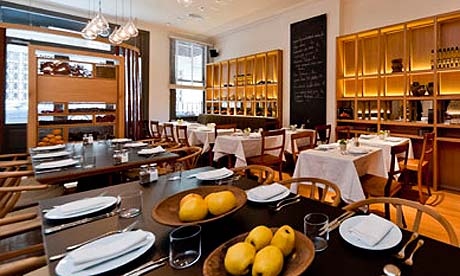
It seems chef Didem Şenol knew exactly what Istanbul
was missing when, last year, she opened Lokanta Maya – a casual
neighbourhood bistro with a brief menu of contemporary Turkish cooking
and seasonal specials. Since opening, Maya has been showered with
well-deserved praise, locally and internationally, quickly earning the
place an enthusiastic following. The mucver, zucchini fritters,
are so popular that Şenol wrote the recipe on a mirror in the dining
room so customers would stop asking for it. The caramelised sea bass
with orange is irresistible, too.
• Kemankeş Caddesi 35/A, Karaköy, +90 212 252 6884, lokantamaya.com, average mains £8. Open Tue-Sat noon-5pm and 7pm-11pm, Mon lunch only
Rumelihisari Iskele
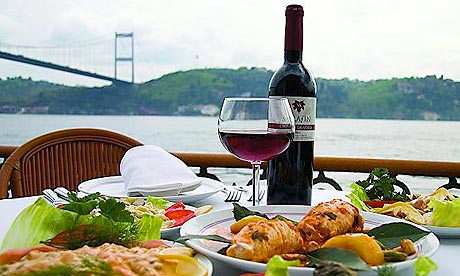
Located right on the Bosphorus in an Ottoman-era boat dock in the
shadows of a medieval fortress, Iskele's atmosphere is as inspiring as
the food is reliably delicious. This is a timeless fish house frequented
by Istanbul traditionalists because they know the city's culinary
traditions are safe within these walls. Waiters know many of their
customers by name, as well as whether they take their raki with or
without ice. A meal is spread out over several courses, starting with
cold meze, followed by hot starters and working up to a seafood
crescendo. This is a very pleasurable Istanbul ritual.
• Yahya Kemal Caddesi I, Sariyer, 90 212 263 2997, rumelihisari.com, mains £16. Open noon-midnight daily
Fish
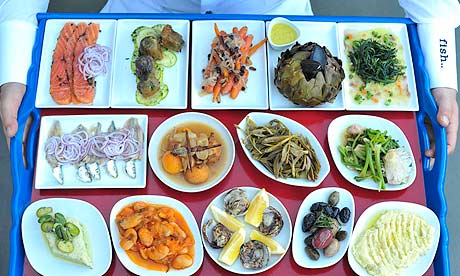
Galatasaray islet might look like a distressed party barge floating
out in the middle of the Bosphorus near Kuruçeşme, but this collection
of restaurants,
nightclubs and even a pool club is one of the city's most stunning and
exclusive places to eat, drink and enjoy the Bosphorus. The restaurant
Fish, opened last year by the founders of 360,
has set the dining bar high with its top-notch, unusual selection of
meze and, of course, fresh fish. This is a spot for a jet set that
hasn't forgotten that where you eat is an important part of the social
scene.
• Suada Club, Galatasaray Adasi, Kuruçeşme, +90 212 265 0158, fishistanbul, mains £21. Open noon-midnight daily
Giritli
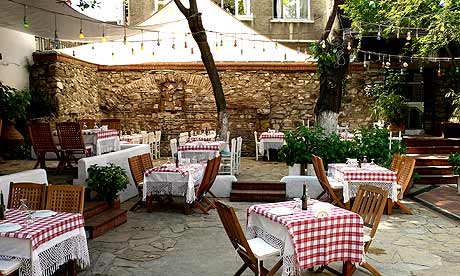
This elegant yet comfortable fish restaurant on a quiet corner in the
Sultanahmet district is full most nights with both locals and tourists,
thanks to the fixed-price menu that includes bottomless glasses of
local wine, raki or beer. But the food here – typical of the Turks who
once lived on the island of Crete – more than holds its own. The grilled
octopus in olive oil is close to perfect, and other highlights include
the seafood and orzo salad and the olives stuffed with walnuts and feta –
part of the dozen or so starters brought to the table. In warmer
months, Giritli's garden is as pleasant any rooftop terrace in the city.
• Keresteci Hakki Sokak, Cankurtaran/Ahirkapi, +90 212 458 2270, giritlirestoran.com, fixed menu £32. Open noon-midnight daily
Leb-i derya
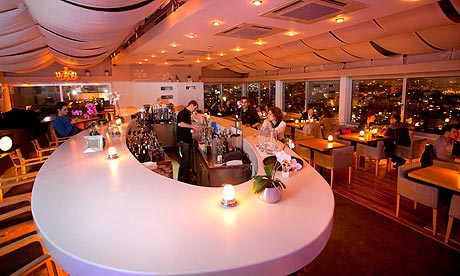
Istanbul's trend for rooftop restaurants
started almost a decade ago with this Beyoğlu veteran, whose owners
were among the first to realise the potential of pairing the city's
magnificent views and warm climate with good food. Leb-i derya's newest
location, at the top of İstiklâl Caddesi's Richmond Hotel, keeps the
views but has a more refined menu than the original down the street. Sea
bass with pancetta and chard and pomegranate-flavoured lamb kebab are
some of that menu's highlights. The sleek long bar, which overlooks the
Bosphorus, is a great place for a drink before or after dinner.
• Istiklal Caddesi 227, 6th floor, Beyoğlu, +90 212 243 4375, lebiderya.com, mains £16. Open Mon-Fri 11am-2am, Sat and Sun 10am-2am
Mikla
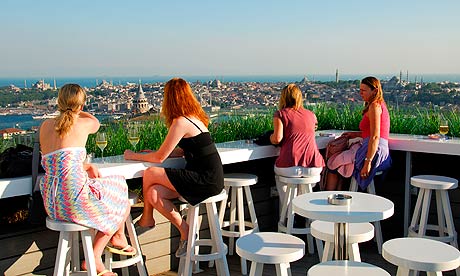
Turkish-Swedish chef Mehmet Gürs sets the Istanbul culinary bar high –
20 storeys high, to be exact. Located on the rooftop of the chic
Marmara Pera hotel, Mikla, which opened in 2005, has a dazzling view of
the city below. But the stylish restaurant's menu, which reflects both
Turkish and Scandinavian influences, more than holds its own. Try the
cherrywood-smoked loin of lamb or the pistachio-crusted lamb chops and
finish up with a plate of artisanal cheeses from the east. The
restaurant's extensive wine list is a good introduction to the exciting
developments in Turkish wine making.
• Meşrutiyet Caddesi 15, Tünel, +90 212 293 5656, miklarestaurant.com, mains £23. Open Mon-Sat 6pm-11.30pm
Famous Hotels
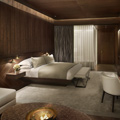
The Istanbul EDITION
Istanbul , Turkey
Style: Boutique/Design
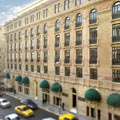
Park Hyatt Istanbul Macka Palas
Istanbul, Turkey
Style: Classic Luxury
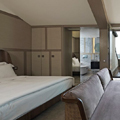
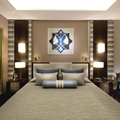
The House Hotel Nisantasi
Istanbul, Turkey
Style: Boutique/Design
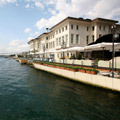
Marti Istanbul
Istanbul , Turkey
Style: Classic Luxury
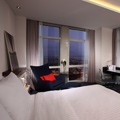
Hotel Les Ottomans
Istanbul, Turkey
Style: Boutique/Design
 Le Meridien Istanbul Etiler
Istanbul, Turkey
Style: Boutique/Design

No comments:
Post a Comment