Photo Gallery
Understand
This magical city of bridges, cathedrals, gold-tipped towers and church domes, has been mirrored in the surface of the swan-filled Poltava River for more than ten centuries. Almost undamaged by WWII, Prague's medieval center remains a wonderful mixture of cobbled lanes, walled courtyards, cathedrals and countless church spires all in the shadow of her majestic 9th century castle that looks eastward as the sun sets behind her. Prague is also a modern and vibrant city full of energy, music, cultural art, fine dining and special events catering to the independent traveler's thirst for adventure.
It is regarded by many as one of Europe's most charming and
beautiful cities, Prague has become the most popular travel destination
in Central Europe along with Bratislava and Krakow. Millions of tourists visit the city every year.
Prague was founded in the later 9th
century, and soon became the
seat of Bohemian kings, some of whom ruled as emperors of the Holy Roman
Empire. The city thrived under the rule of Charles IV, who ordered the
building of the New Town
in the 14th century - many of the city's most important attractions
date back to that age. The city also went under Hapsburg rule and became
the capital of a province of the Austro-Hungarian Empire. In 1918,
after World War I, the city became the capital of Czechoslovakia. After
1989 many foreigners, especially young people, moved to Prague. In 1992,
its historic center was inscribed on the UNESCO World Heritage List. In
1993, Czechoslovakia split into two countries and Prague became capital
city of the new Czech Republic.

Climate
The weather conditions in Prague correspond to the overview mentioned in the previous paragraphs. But the fundamental is that it has temperate climate with variations throughout the year.
In the winter Prague has definitely its own magic. The snow may cover the surface but it sooner or later melts so it doesn't usually last till too long. However, the weather is of course pretty unpredictable so it may as well burst into snow storm but it is not very common.
Spring season - is maybe one of the best times to come for a visit, especially in the month of May. All the nature wakes up after months of hibernation. The cherish atmosphere when everything comes back to their lives is all around. Summer months - are a very popular touristic season and no wonder why. The weather is warm and sunny but sometimes the heat waves are overwhelming so the people with respiratory problems may have some trouble. The rain showers come up more often than any other time.
Colorful and chilly - these two characteristics define the fall/autumn season. Getting dressed warmer is a must because the wind and overcast sky may get in your way. Nevertheless there are also these beautiful sunshine days that literally call you out for a walk.
Climate
The weather conditions in Prague correspond to the overview mentioned in the previous paragraphs. But the fundamental is that it has temperate climate with variations throughout the year.
In the winter Prague has definitely its own magic. The snow may cover the surface but it sooner or later melts so it doesn't usually last till too long. However, the weather is of course pretty unpredictable so it may as well burst into snow storm but it is not very common.
Spring season - is maybe one of the best times to come for a visit, especially in the month of May. All the nature wakes up after months of hibernation. The cherish atmosphere when everything comes back to their lives is all around. Summer months - are a very popular touristic season and no wonder why. The weather is warm and sunny but sometimes the heat waves are overwhelming so the people with respiratory problems may have some trouble. The rain showers come up more often than any other time.
Colorful and chilly - these two characteristics define the fall/autumn season. Getting dressed warmer is a must because the wind and overcast sky may get in your way. Nevertheless there are also these beautiful sunshine days that literally call you out for a walk.

Talk
Czech is the official language of Prague and the Czech Republic. Simple words and phrases in other Slavic languages (for example Serbian/Croatian/Bosnian and Polish) are also commonly understood. Slovak
can also be acceptable to a certain extent, as Czech and Slovaks have
historically understood each other without the need of a translator.
Both languages are very similar and mutually intelligible to a very wide
extent.
Most young people speak English very well, you will also have no problem speaking English at restaurants and bars. Many restaurants have English menus. The people at counters in train and metro stations, and police officers rarely speak English. Russian is widely understood by people who were attending school before the Velvet Revolution in 1989, but the language is too different from Czech to be understood without study. In addition, some people may dislike using Russian even if they know it because of the Soviet occupation of the Czechoslovakia in 1968 and Communist history in general. Many Czechs also have some knowledge of German. People studying after 1989 and even some older people can speak English. However, learning Czech will surely endear you to the locals.
Most young people speak English very well, you will also have no problem speaking English at restaurants and bars. Many restaurants have English menus. The people at counters in train and metro stations, and police officers rarely speak English. Russian is widely understood by people who were attending school before the Velvet Revolution in 1989, but the language is too different from Czech to be understood without study. In addition, some people may dislike using Russian even if they know it because of the Soviet occupation of the Czechoslovakia in 1968 and Communist history in general. Many Czechs also have some knowledge of German. People studying after 1989 and even some older people can speak English. However, learning Czech will surely endear you to the locals.
Drink
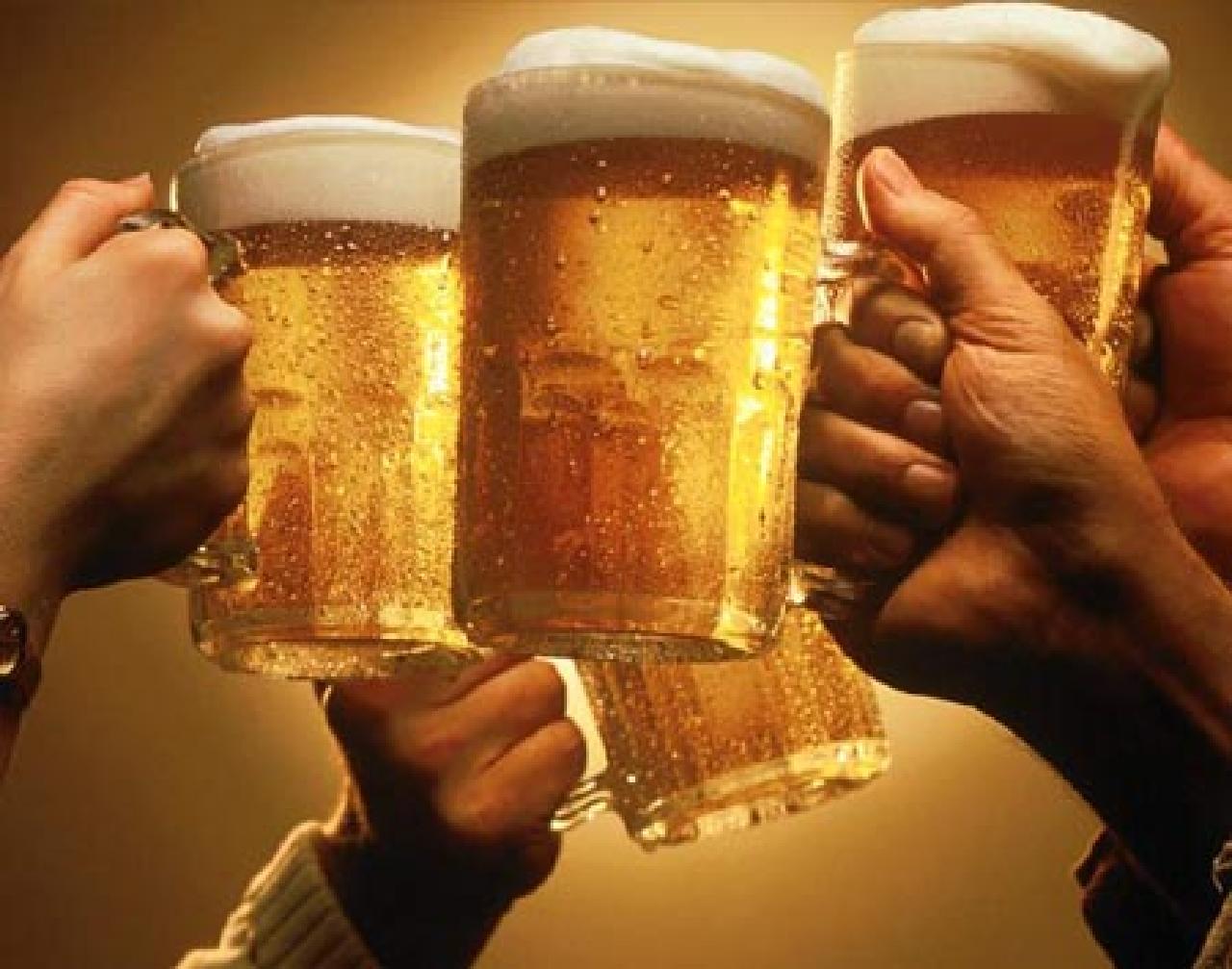
Pubs (in Czech "hospoda") abound throughout Prague, and indeed
are an important part of local culture. The exact brand of beer usually
vary from pub to pub, and recommendations are difficult to give as
natives are usually willing to argue at lengths about their preferences.
The most internationally recognized beers are Pilsner Urquell (Plzeňský Prazdroj) and Budweiser Budvar (Budějovický Budvar).
There are other brands famous among Czechs like Gambrinus. If you are
looking for a beer brewed in Prague, go for Staropramen. Usual prices
for a half-liter glass are between 20 and 35 CZK, based on the brand and
locality, while certain restaurants at tourist areas like the Old Town
Square are known to charge more than 100 CZK for an euro-sized glass. At
a grocery store a half liter bottle may cost 15 CZK. Drinking in public
is illegal in Prague, but if you are not drunk and disorderly, or in a
large group, it will probably not cause trouble. Don't be afraid to
experiment with different beer brands, even if they are not mentioned in
this article.
In Prague it is customary, especially at beer halls, to sit with a
group of people if there are no free tables, so go ahead and ask if you
can join. Prague has also many excellent tearooms (in Czech čajovna) which serve different kinds of teas from around the world.
|
| famous restaurants 1. Bellevue Restaurant
Bellevue is considered by many critics to be Prague's premier
restaurant. Situated in a chateau-like building close to the river,
Bellevue serves superb cuisine in fine, elegant surroundings, whilst
affording diners good views of Charles Bridge and Prague Castle across
the water. A fine dining experience, with some of the best wines in
Prague.
|
Address: Smetanovo Nab. 18, Old Town, Prague 1
2.Kampa Park Restaurant
Kampa Park Restaurant, one of Prague's finest restaurants, is set in an
exclusive location beside the river on Kampa Island, right next to
Charles Bridge. Kampa Park offers flamboyantly presented international
fare, including a superb selection of fresh seafood, classic Czech wild
game dishes and innovative meat selections.
Address: Na Kampe 8b, Lesser Town, Prague 1
3.Francouzska Restaurant
Gold & crystal chandeliers hang elegantly from the high ceiling of
the Francouzska Restaurant. With gleaming tableware and fresh flowers
spread throughout, the restaurant simply sparkles. During the day huge
windows facing out on to Republic Square flood the building with natural
light. Perfect anytime, day or night. Live piano every night.
Address: Republic Square 5, Old Town, Prague 1
4.Terasa U Zlate Studne Restaurant
Terasa U Zlaté Studně is one of the 'hidden secrets' of the Lesser Town,
tucked away in the cobbled back streets of this delightful quarter, and
set on the roof of a hotel. As you enter the restaurant, a panoramic
view over Prague unfolds, taking in the terracotta rooftops of the
Lesser Town, the Vltava River and across to the spires and towers of the
Old Town.
Address: U Zlate studne 166, Lesser Town, Prague 1
5.Celeste Restaurant
Set on the top floor of the famous Dancing House, Celeste is a stylish,
air-conditioned restaurant with a delightful menu and magnificent views
over Prague. Prague Castle, the Vltava River and Charles Bridge all lie
before you in panoramic splendour. In the summer, guests can also dine
on the rooftop terrace.
Address: Dancing House, Rasinovo Nabrezi 80, New Town, Prague 2

Great overview!
ReplyDelete